South Korea Travel Guide for Families and First-Timers
- Jun 16
- 7 min read
Updated: Jul 21
South Korea Travel Guide: What Families and First-Timers Need to Know. Your teenager already knows more about South Korea than you might expect. The food, the music, the skincare, the films. What they may not know is that the country behind all of it is even better in person. This is not the trip their friends are taking. It is the one they will still be talking about when everyone else comes back with the same photos from the same beaches. Consider this a south Korea travel guide for first-timers that also works for south Korea family travel, especially if you're visiting south Korea with teenagers.
Seoul Travel Guide: Top Things to Do for Families
Start at Gyeongbokgung Palace, built in 1395 and eventually rebuilt to include more than 7,700 rooms across 500 buildings. Even teenagers who think they have seen every palace will like this one. Depending on the group's style, consider renting hanbok, the traditional Korean dress. Some families love the photos and the feel of walking the palace grounds in full color. Others find it a little touristy. One detail that might tip the decision: hanbok rental includes free palace admission, which covers the Sumunjang changing of the guard ceremony at 10am and 2pm (the palace is closed on Tuesdays). Worth timing the visit around either way.
Walk from the palace to Bukchon Hanok Village, where traditional Korean houses from the Joseon period now house tea rooms, small galleries, and local shops.
The morning that earns the most conversation at dinner is the food walk through Gwangjang Market. We recommend a food expert leads it, and the tastings move through mung bean pancakes, fresh bibimbap, and sesame-rolled rice cakes from vendors who have been at the same stalls for decades. It functions as lunch and you can spot the 'Netflix Noodles Lady' in action.
The DMZ is the stop most families say is a meaningful stop on the trip. The tour includes the 3rd Infiltration Tunnel, the Dora Observatory, and time with North Korean defectors who share their stories directly. It is sobering in a way documentaries can't replicate.
Lunch afterward at Neungra Bapsang, where the owner Lee Ae-ran escaped North Korea and became the first defector to earn a PhD in nutrition and food science, adds a layer that stays with people long after the trip ends. She often joins guests at the table to share her story in person.

Where to stay: The Four Seasons Hotel Seoul sits near Gwanghwamun Square, steps from the palaces and Myeongdong. The design incorporates classical Korean motifs and more than 160 original artworks. It is the kind of hotel teenagers actually notice.
Seoul has a second itinerary running underneath the official one. On any given week there is a pop-up from a Korean designer that will not be there next month, a limited food collaboration that opened with no announcement, a temporary installation that appeared in someone's feed and will disappear before most visitors think to look it up.
The challenge is that some of these do not surface in English. The real-time pop-ups, the collab drops, the neighborhood moments, live in Korean-language spaces most visitors never reach. A guide with actual roots in Seoul's creative community knows which neighborhoods are active that week and which ones peaked two years ago and are now running on reputation. That is not information you can research from home.
K-Beauty has its own version of this. Myeongdong is only the surface. Brands regularly open temporary flagship experiences in Gangnam and Seongsu that are worth building into the schedule. A color analysis session connects directly to what teenagers are already interested in and produces something they will actually use when they get home.

Busan Travel Guide: Beaches, Markets, and the Best Things to Do
Most itineraries underserve Busan. That is a mistake. South Korea's second-largest city has a completely different energy from Seoul: the air smells like the sea, the food is fresher, the neighborhoods tell stories the history books skip. Give it two full days minimum.
Jagalchi Fish Market is South Korea's second largest seafood market and runs along the waterfront with vendors selling octopus, squid, oysters, clams, and live fish pulled from tanks that morning. Arrive early. Teenagers who are skeptical about fish markets find themselves engaged within a few minutes.
Gamcheon Culture Village is the stop that produces the most photographs and instagrammable moments. Built in the 1920s to house Busan's poorest residents and transformed in the early 2000s through a community arts initiative, it is now a hillside of pastel houses, painted staircases, and sculpture installations tucked into alleyways. The story underneath it is more interesting than the photographs suggest. For teenagers who follow street art or urban design, this is a full afternoon, not a passing look.

The day closes at the United Nations Memorial Cemetery, the only UN cemetery in the world, where soldiers from 11 countries who died defending South Korea during the Korean War are laid to rest. For American families, this is a quiet but powerful stop. It is a chance to walk through and understand the scale of US involvement in a war that does not get much attention in most history classes back home, and to see how deeply South Korea still honors that sacrifice. The grounds are peaceful and well kept, and the visitor center adds context that makes the rest of the trip, and the freedoms this country now enjoys, land differently.
Where to stay: The Park Hyatt Busan overlooks Haeundae Beach and the Gwangan Bridge. The floor-to-ceiling windows make the most of one of the best urban views in the country.
Gyeongju Travel Guide: A Day Trip Worth the Detour
Two hours and forty minutes from Seoul by KTX bullet train, Gyeongju was the capital of the Silla dynasty for nearly a thousand years.
Royal burial mounds rise from the center of town.
Bulguksa Temple, a UNESCO World Heritage Site, rewards an unhurried hour. One day here lands differently than expected and is a natural counterpoint to the pace of Seoul and the energy of Busan.

Jeju Island: The Trip Within the Trip
Jeju was not on our Seoul and Busan itinerary, but mom traveled there and came back with a clear perspective: Jeju is a completely different South Korea and belongs in the conversation for families who have the time to include it.
A volcanic island off the southern coast, Jeju has lava tube caves, crater lakes, black sand beaches, and Hallasan, the highest peak in South Korea. Younger children respond to the waterfalls and beaches. Teenagers find the volcanic landscape interesting. Grandparents appreciate that it moves at a slower pace with comfort and great food.
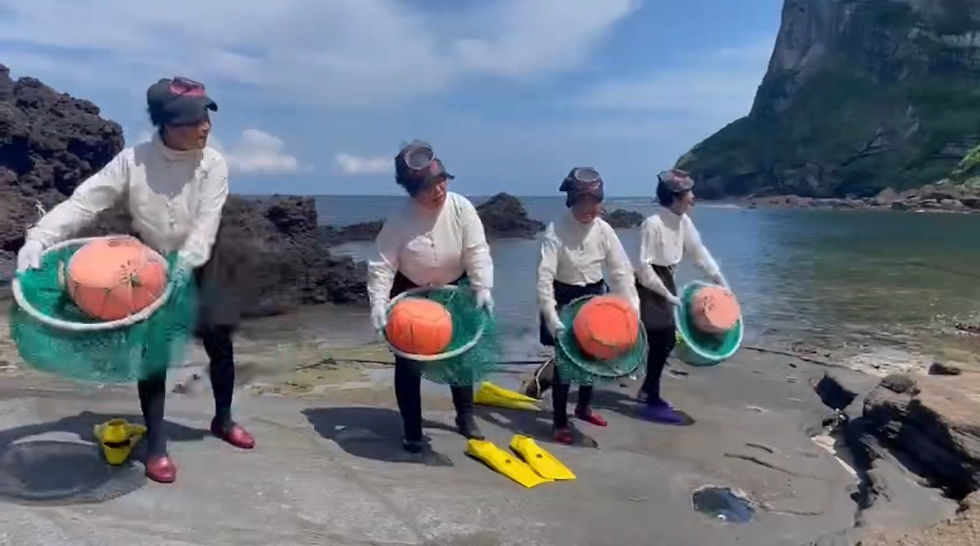
The haenyeo, women divers who have harvested seafood from Jeju's waters for centuries and were recognized by UNESCO in 2016, are memorable encounters. Jeju works best as a two to three night extension or as its own dedicated trip for families returning for a second visit.
A Note on Planning
The details in this guide come from firsthand time on the ground in Seoul, Busan, and Gyeongju, and from Mindy's recent time in Jeju. The DMZ coordination, the Gwangjang Market food walk, the reservation at Neungra Bapsang, the question of which Seoul neighborhoods are worth your time this season: none of that comes from a search engine. It comes from being there.
If you are thinking about South Korea for a family trip and want help thinking through the shape of it, that conversation is a good place to start.
Q&A
Question: What are the top Seoul experiences for families with teens?
Short answer: Start at Gyeongbokgung Palace, renting hanbok can make it more fun (and includes free palace admission), and timing your visit for the Sumunjang changing of the guard at 10am or 2pm adds a highlight (note: the palace is closed on Tuesdays). Walk over to Bukchon Hanok Village for tea rooms, small galleries, and local shops in historic hanok houses. For lunch, a guided food walk through Gwangjang Market, sampling mung bean pancakes, fresh bibimbap, and sesame-rolled rice cakes—wins over even skeptical teens and lets you spot the “Netflix Noodles Lady.” If you want a centrally located, design-forward base teens will notice, the Four Seasons Hotel Seoul sits by Gwanghwamun Square, close to the palaces and Myeongdong.
Question: Is the DMZ visit right for a family trip?
Short answer: Yes, families consistently call it one of the most meaningful stops. The tour typically includes the 3rd Infiltration Tunnel and the Dora Observatory, plus direct time with North Korean defectors whose personal stories make the experience far more impactful than a documentary. Following the tour with lunch at Neungra Bapsang deepens the day: owner Lee Ae-ran, herself a North Korean defector and the first to earn a PhD in nutrition and food science, often joins guests to share her story at the table.
Question: How do we catch Seoul’s pop-ups and K-Beauty moments that don’t show up in English?
Short answer: Seoul runs on a “second itinerary” of limited drops, pop-ups, and neighborhood moments that often surface only in Korean. A guide with real roots in the creative community can steer you to what’s actually hot this week (and away from spots coasting on old hype). For K-Beauty, Myeongdong is just the surface—temporary flagship experiences frequently appear in Gangnam and Seongsu. A color analysis session connects directly to what teens already love and gives them something they’ll actually use when they’re back home.
Question: Is Busan worth adding, and how long should we give it?
Short answer: Absolutely, most itineraries underserve Busan, and that’s a mistake. Give it at least two full days. Expect a different energy from Seoul: sea air, fresher food, and neighborhoods with lived-in stories. Go early to Jagalchi Fish Market for a lively, hands-on seafood scene. Plan unhurried time in Gamcheon Culture Village—beyond the pastel photos, its community arts transformation rewards teens interested in street art and urban design. Close a day at the United Nations Memorial Cemetery, a quiet, powerful lens on the Korean War and how South Korea honors that sacrifice. For a memorable stay with sweeping views of Haeundae Beach and the Gwangan Bridge, consider the Park Hyatt Busan.
Question: Are Gyeongju and Jeju worth the detour for families and first-timers?
Short answer: Yes, each adds a distinct chapter to the trip. Gyeongju is an easy cultural counterpoint to Seoul and Busan: about 2 hours 40 minutes from Seoul by KTX, it was the Silla capital for nearly a millennium. Royal burial mounds dot the town, and Bulguksa Temple (a UNESCO site) rewards an unhurried visit—perfect for a day trip. Jeju Island is a “trip within the trip”: a volcanic landscape of lava tube caves, crater lakes, black sand beaches, and Hallasan. Younger kids love the waterfalls and beaches; teens are drawn to the geology; grandparents appreciate the slower pace and great food. Encounters with the haenyeo (women divers recognized by UNESCO in 2016) are memorable. Jeju works best as a two to three night extension or as a standalone return-trip focus.


